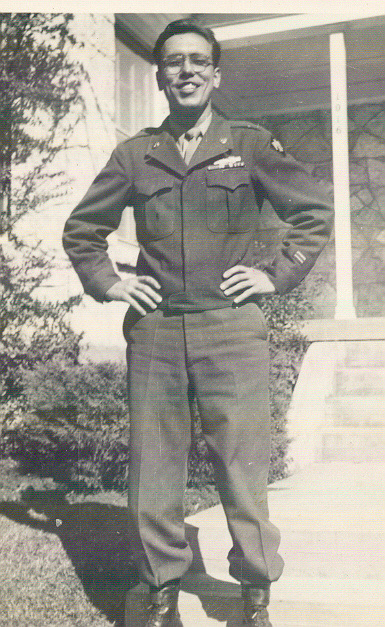
“Black crow landing on an icy limb!” cawed my grandfather, on an unassuming, summer day in the 90’s, as he lowered his hand ominously, about to deliver a pinch between my neck and shoulder that would have made Mr. Spock blush. Like Crow, my grandfather was a trickster. I shrieked as I squeezed my shoulders as close to my ears as I could, in a last-ditch effort to protect myself from his frigid talons.
About five decades earlier, on December 10, 1944, my grandfather, who was no one’s grandfather yet, laid prone on frozen ground, perched atop a cut of a road, just outside of the Nazi-controlled, French town of Mertzwiller, eating a sandwich. The fog rested heavy all around, as he looked down the sights of his M1918 Browning Automatic Rifle (BAR) for German Soldiers appearing in the fog. His lunch ended abruptly as a bullet whistled just above his head, causing a small branch from the bush he was using as concealment to fall on his helmet. Unable to identify the location of his assailant through the fog, he quickly grabbed his rifle and slid down the cut into a ditch on the side of the road, where the officers were safely tucked into place. Just a short time later, they identified a group of about fourteen German Soldiers fleeing the town, about to cross the road, approximately 400 yards down the way. Before they reached the road, my grandfather fired up his BAR and unloaded 60 rounds in their direction, in an impressive display of fire that pierced the fog. After the third magazine unloaded, he made ready his weapon, and held his fire. The ensuing silence was made deafening by the ringing of ears as the fog swirled back into stillness. A few minutes later, a stick adorned with a white bed sheet appeared, followed by the Germans, formed in two columns. As they approached, my grandfather, who was tickled at the notion that he had just captured fourteen enemy combatants, jumped back into his firing position and postured as if he was going to continue with an encore to his previous fireworks display. The alarmed officers cried out sharply for a ceasefire while more than a few of the unfortunate German Soldiers pissed themselves in the road. My grandfather scowled as the officers verbally reprimanded him. He was unable to hide his dismay at the inability of the officers (and German Soldiers, if we’re being honest) to let their skivvies out of a twist and take a joke.

Throughout my childhood, my grandfather kept me on my toes with his pranks. His signature move was to take an exaggerated, pretend swing at your face, only to give you a surprise kick in the pants when you ducked the blow. He wasn’t just a slapstick trickster, however; he was also fond of delivering riddles and questions for debate that would have your brain tying knots on itself. He already had an enigmatic answer prepared and supported by the most obscure (yet true) data, but he relished a good debate and the chance to get you thinking critically (and maybe a little fired up, if he could manage it). Without exaggeration, my grandfather read nearly a book a day, and it seemed like there was no topic of discussion he was unable to entertain. Like Crow, his intelligence was astounding and, to me as a young girl, seemed limitless.
When my grandfather was drafted, he had just begun his collegiate career as a Bachelor of Music Education and Big Band musician. Because he was a student, he had been postponed from the draft for a year, already. He was placed in the Army Specialized Training Program (ASTP), which was a pilot program where he claims the Army placed the “intellectually equipped” Soldiers. His training in the ASTP kept him out of combat for another year, until the pressure from the enduring conflict forced the Army to disband the program and send the participants to the infantry for immediate deployment to the Western Front. Even though the program was disbanded, and he was sent to the infantry with everyone else, my grandfather credits the opportunities afforded to him for his intelligence, along with his dedication to reading every issue of the Infantry Journal, cover to cover, as some of the primary reasons he was fortunate enough to survive the war.
Outside of the town of Schillersdorf, on the morning of January 25, 1945, the sun was cracking through the trees, above the snow-covered horizon, as my grandfather anxiously packed his stomach with as much rationed cheese as he could in an attempt to silence the message originating in his gut. Today would be his last day.
In the town, my grandfather carefully stepped over a dead American Soldier, lying in the gateway of a house he was instructed to clear. He entered the home and began to clear the first floor. The home had been badly damaged by recent machine gun fire, which left the wood on the staircase smoldering. After clearing the three rooms on the first floor, my grandfather paused to gather his thoughts and eat an apple that was lying on a table. He was startled when someone entered through the hallway. In his surprise, he nearly shot the man who appeared as a lost ghost, wandering the halls of his fading memories. “Alles kaput” shrugged the man before shuffling off into another room of his destroyed home. My grandfather then took his leave through a shell hole in the wall of the kitchen. Back in the street, the sergeant motioned for the squad to move forward to the next house. My grandfather was moving quickly along the road past the dead Soldier when he was knocked to the ground. Knowing, logically, that he must have been shot, he crawled around the side of the house where he could assess his wounds. His hands were numb from the snow and the shock, and it took him significant searching to finally identify entry and exit wounds above his hip that yielded little bleeding or pain. As he laid in the snow, the rest of his squad apprehended the German Soldiers who had shot him, killing one and capturing another. An hour later, a jeep made its way into the town to medevac my Grandfather to the town over, strapped to the hood of the vehicle. Upon arriving in the town, a chaplain removed my grandfathers boots to be passed on to a Soldier who could use them. Once he was stabilized, my grandfather was ultimately transported to a hospital in England for the duration of his recovery.
Five months later, my grandfather was preparing to redeploy on the Western front with a new unit when the German Army surrendered. He was then sent back to the US to prepare to redeploy to Japan. Fortunately, for him, the bombs were dropped and Japan surrendered before that happened. In November of 1945, he was discharged and made his way home to Pennsylvania.
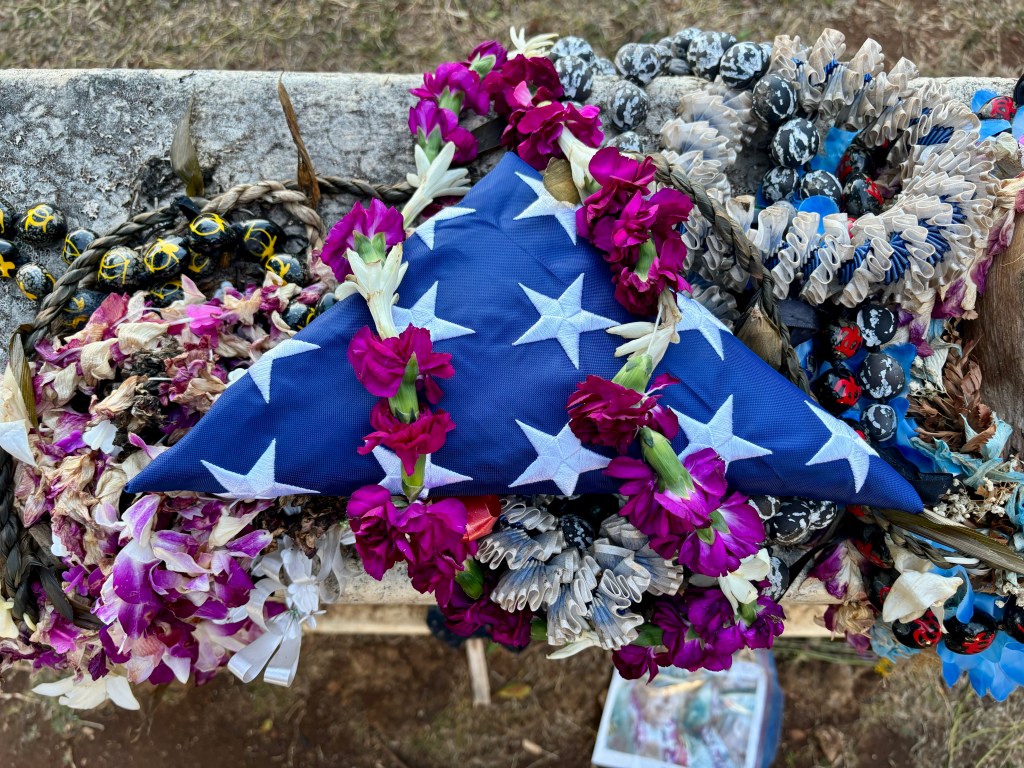
Having faced his mortality, my grandfather turned to his logic and intelligence to map out a survival plan for the future, since he believed they had served him so well in the recent past. He abandoned his musical ambitions, changing majors and going on to invent molecules as a chemical engineer. Before the war, he had no interest in politics or current events, but, from then on, he always made sure to stay informed and on the “right” side of the history being written. He developed habits of reading daily and playing Bridge multiple times a week, religiously, which kept his mind heavily fortified until two months ago, when his soul passed on, at 100 years and 22 days of earthly age.
There were no misconceptions in my grandfather’s mind about who he was, and he lived his life unapologetically (much to the chagrin of my grandmother and everyone around him, at times). In the summer, he read the paper in the sunshine on the back deck, wearing just his UDT shorts, revealing much more of his lanky thighs than any granddaughter ever wanted to see. He drank Gin Gimlet’s or the finest jug wine at happy hour, while staking intellectual debates with anyone whose goat he thought he could get (for educational purposes, only, of course). Then, he watered the same African Violet plant he had been caring for since the 80’s and indulged in a few episodes from Cheyenne or Band of Brothers, before calling it a night.
Since his passing, I see the presence of Crow and his wisdom, all around, and I feel the power of the legacy of lessons that my grandfather left for me. In Hinduism, it is believed that the ancestors visit the living in the form of a crow. They appear to accept our offerings in their honor and to leave us with their blessings. In honor of my grandfather’s life and legacy, I invite you to meditate on these lessons during your practice, and, if you feel called to it, bring yourself into Crow pose.
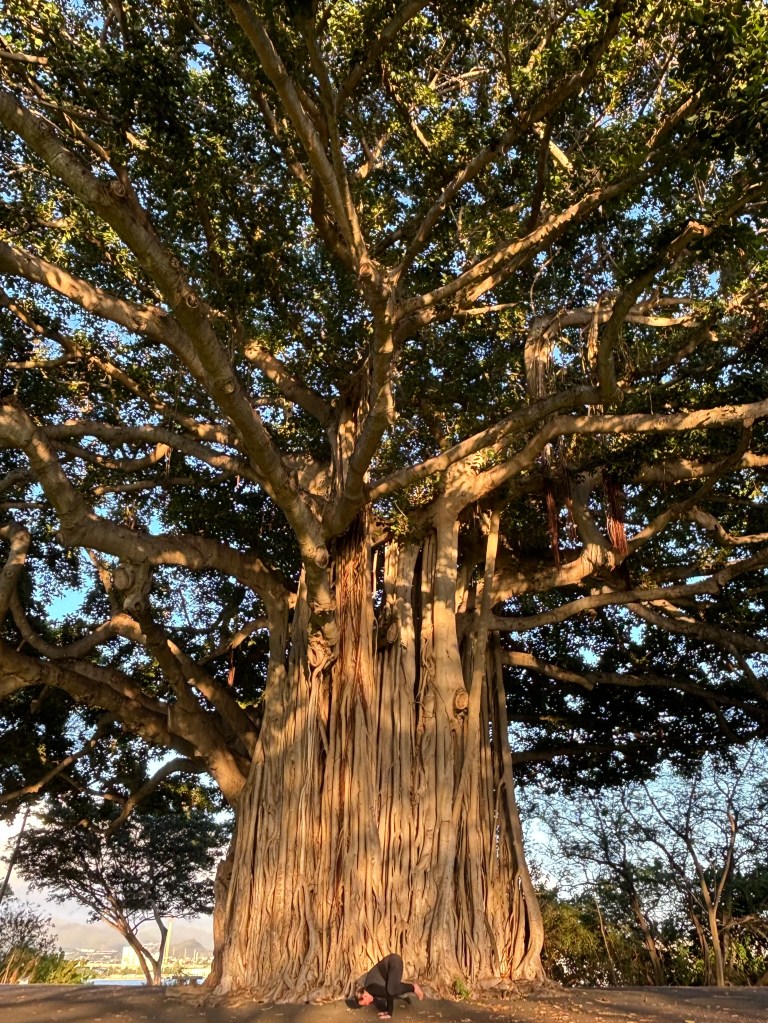
As we move into Crow pose, kakasana, we are reminded to have trust in our knowing, even when what we see is a world turned upside-down. We can rely on our intelligence to realign our focus, reminding us that the situation is only a matter of perspective. We can also trust in the strength of our core, which houses our third chakra along with our sense of self and inner power, to support us and carry us through the challenges that confront us. Carry these lessons with you, allowing your senses of self, knowing, and wit to carry you forward, confidently, as the Crow flies.

 Namaste for Your Service